
Indicative 2026 budgets for adventure parks in India, from a resort adventure zone to an 8 acre destination park, with the costs most owners forget.
Ask ten people what an adventure park costs in India and you will hear ten numbers, from Rs 30 lakh to Rs 30 crore. Both can be right, because the budget depends on three things: how much land you have, which attractions you choose, and how much site work the land needs. This guide breaks the cost down in plain numbers so you can walk into your first planning meeting with a realistic range.
What an adventure park budget actually covers
Most first estimates only count the rides. A real project budget has more lines, and missing them is the most common reason parks run short of money before opening. A complete budget usually covers:
- Attractions and equipment: the rides, rope courses, climbing walls, inflatables and their safety gear such as harnesses, helmets, lanyards and brakes.
- Design and engineering: master plan, layout drawings, structural design for towers and poles, and load calculations.
- Civil works: foundations, footings, levelling, drainage, pathways and safety surfacing under every fall zone.
- Power and services: electrical connections, lighting for evening operation, water points and CCTV.
- Freight and installation: transport to site, cranes where needed, and installation crews.
- Training and handover: operator training, rescue drills and written operating procedures.
- Guest areas: ticketing, waiting zones, toilets, shade, lockers and a cafe.
- Approvals and insurance: local permissions, fire and structural sign offs, and public liability cover.
- Contingency: keep 8 to 12 percent aside for surprises on site.
As a rough rule, attractions are 50 to 65 percent of the total. Site work, services and guest areas make up most of the rest.
Indicative adventure park budgets by size
The table below shows typical ranges seen across Indian projects in 2026. Use it to place your idea in the right bracket, not as a quote.
| Park type | Typical area | Typical attraction mix | Indicative total budget |
|---|---|---|---|
| Adventure zone in a resort or school campus | 10,000 to 25,000 sq ft | Zipline, climbing wall, low rope course, 3 to 5 inflatable or team games | Rs 40 lakh to Rs 1.5 crore |
| Standalone starter adventure park | 1 to 2 acres | High rope course, zipline, climbing wall, one swing ride, ATV track, family games | Rs 1.5 crore to Rs 4 crore |
| Mid-size adventure park | 3 to 5 acres | Two to three anchor thrill rides, multi-level rope course, water activities, cafe | Rs 4 crore to Rs 10 crore |
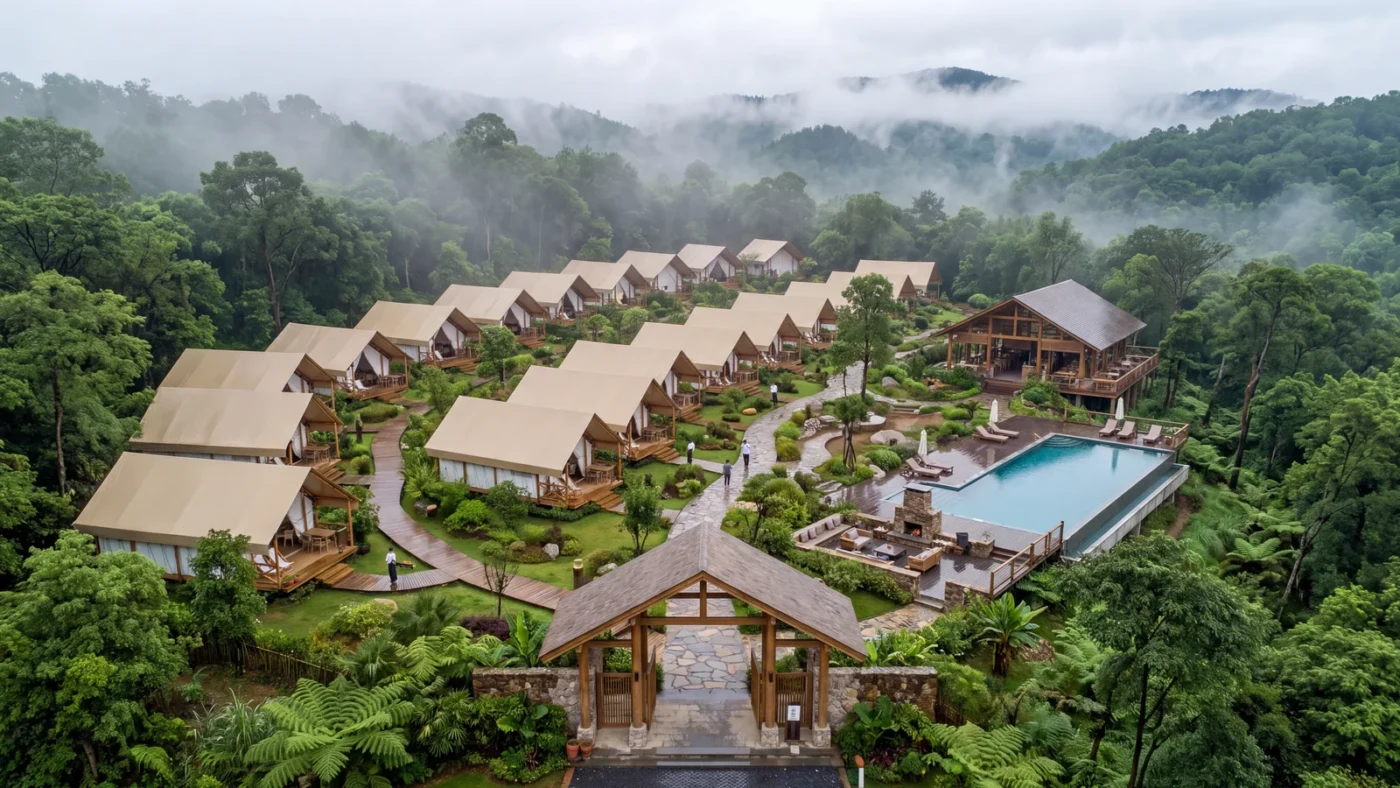
| Destination adventure park | 8 acres and above | Signature rides, long ziplines, water zone, glamping stay, events lawn | Rs 10 crore to Rs 30 crore and above |
How the attraction mix moves the number
Two parks of the same size can differ in cost by three times, simply because of what is inside them. Think of your mix in four layers.
1. Anchor thrill rides
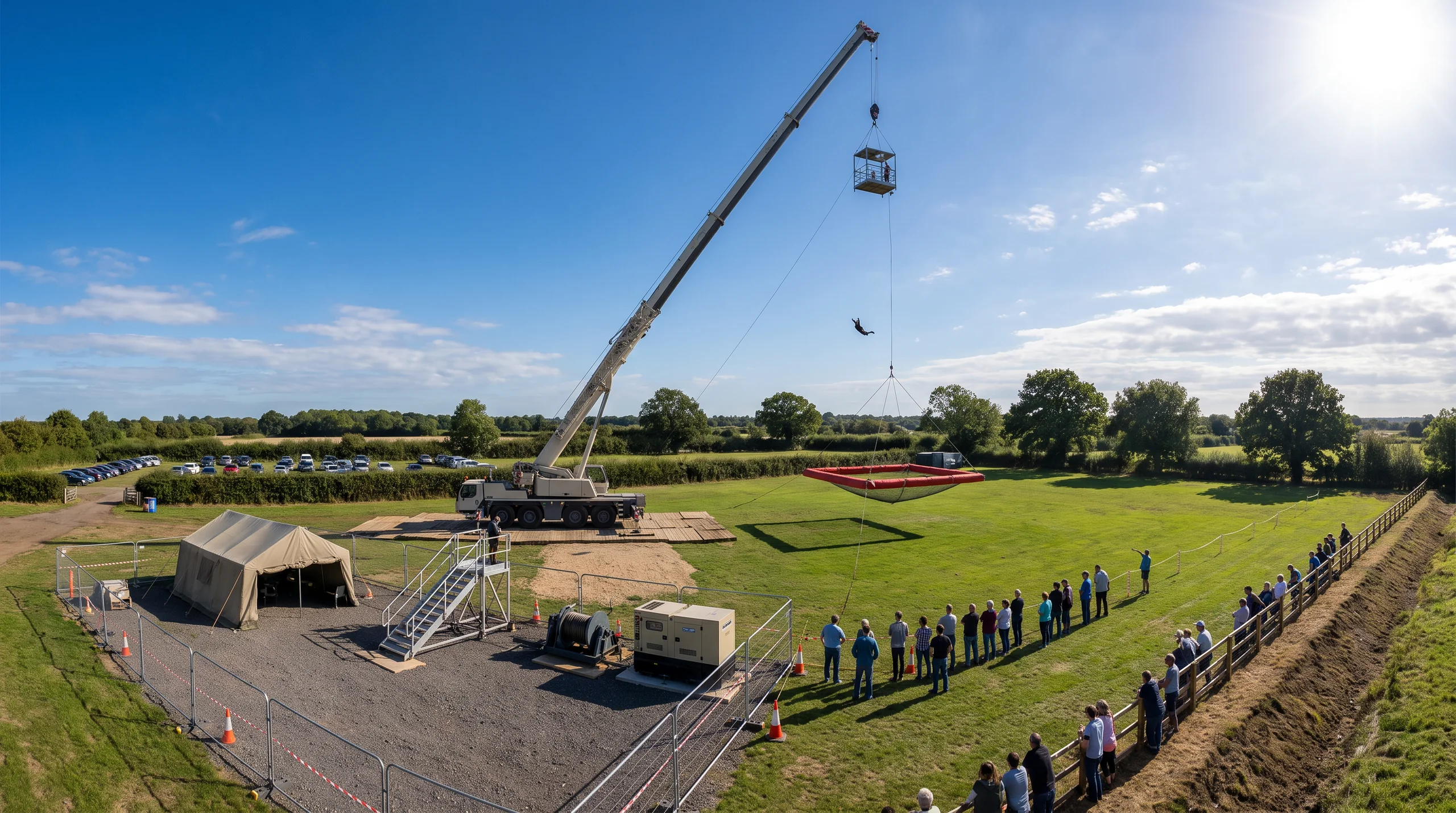
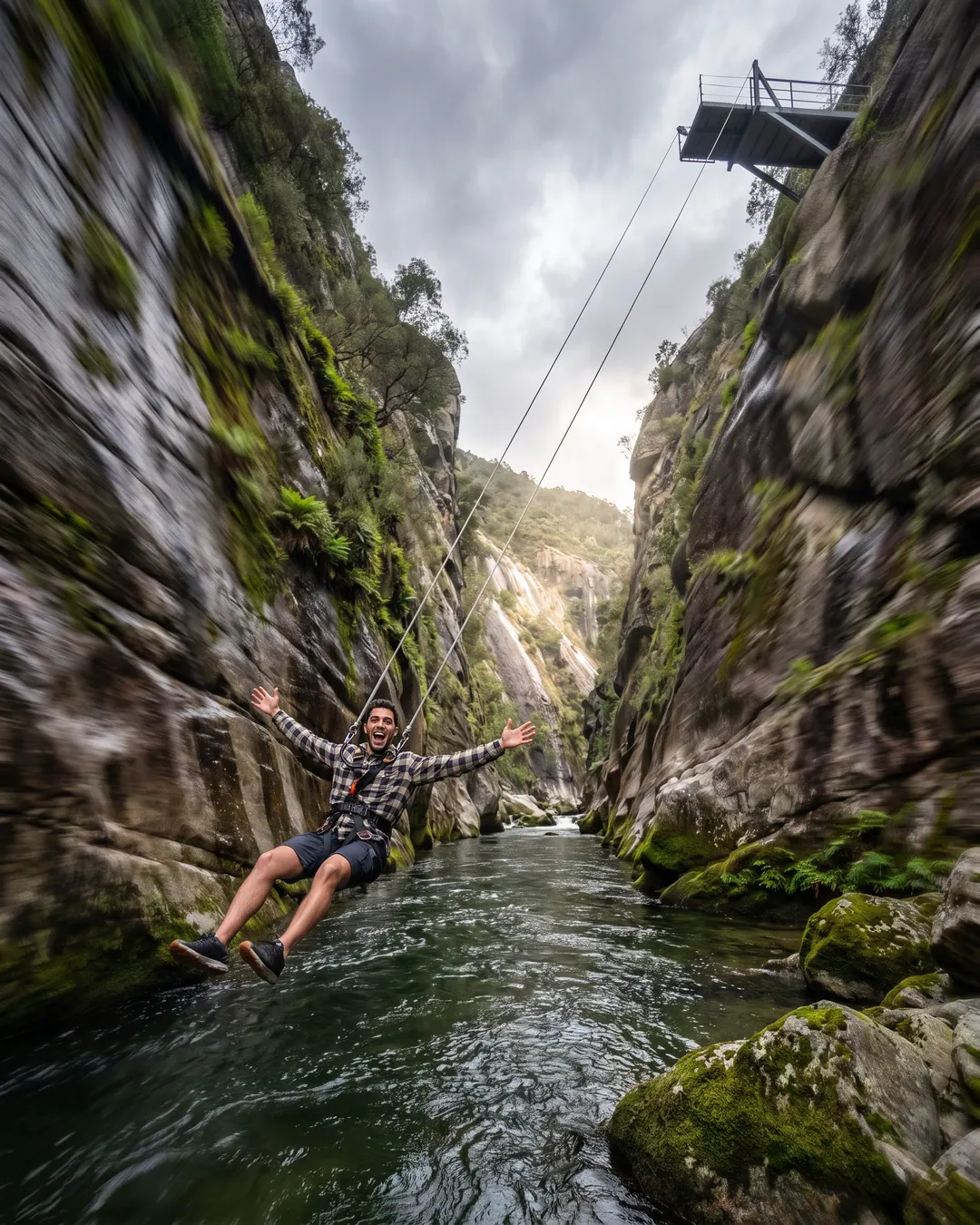
These are the rides people travel for and post about: a canyon swing, a giant swing, a free fall jump or a reverse bungee. They carry the highest cost per attraction, often Rs 20 lakh to Rs 1.5 crore each depending on height and structure, but they also carry the highest ticket price. One or two anchors are usually enough for a starter park.
2. Rope courses, ziplines and climbing
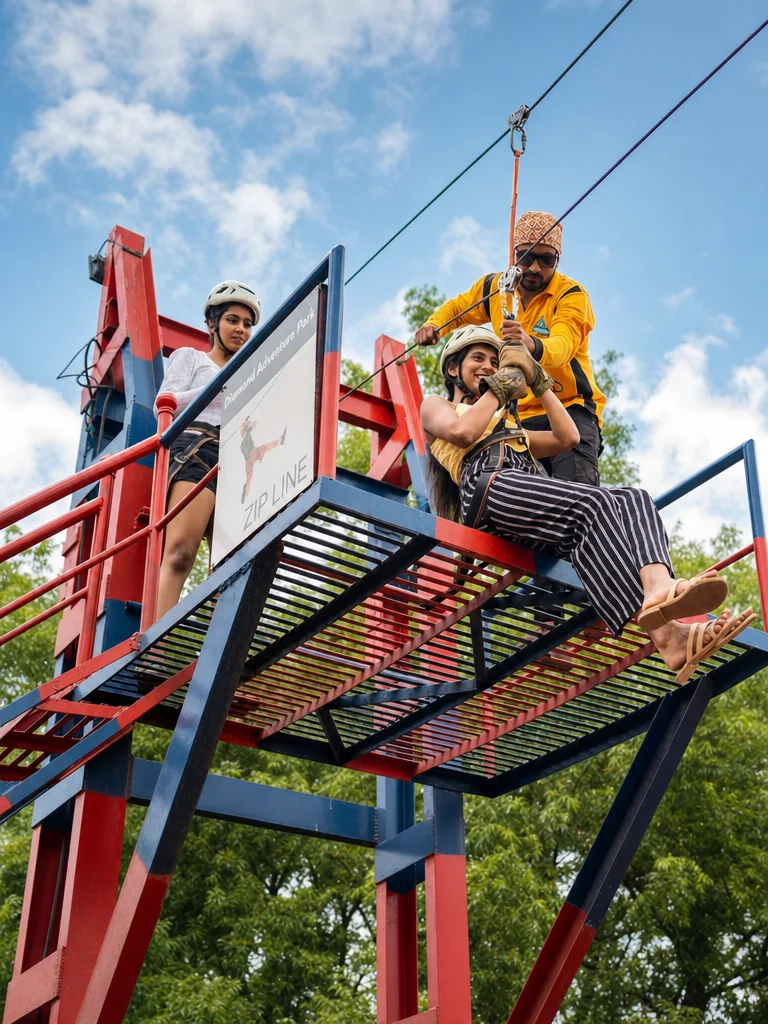
A high rope course, a zipline and a rock climbing wall form the backbone of most Indian adventure parks. They suit school groups, corporate outings and families, and they handle good numbers per hour. Costs depend on height, number of elements, and whether you use poles, trees or a steel structure. A compact adventure tower that stacks climbing, zipline and a jump on one footprint is a good choice when land is tight.
3. Rides and simulators
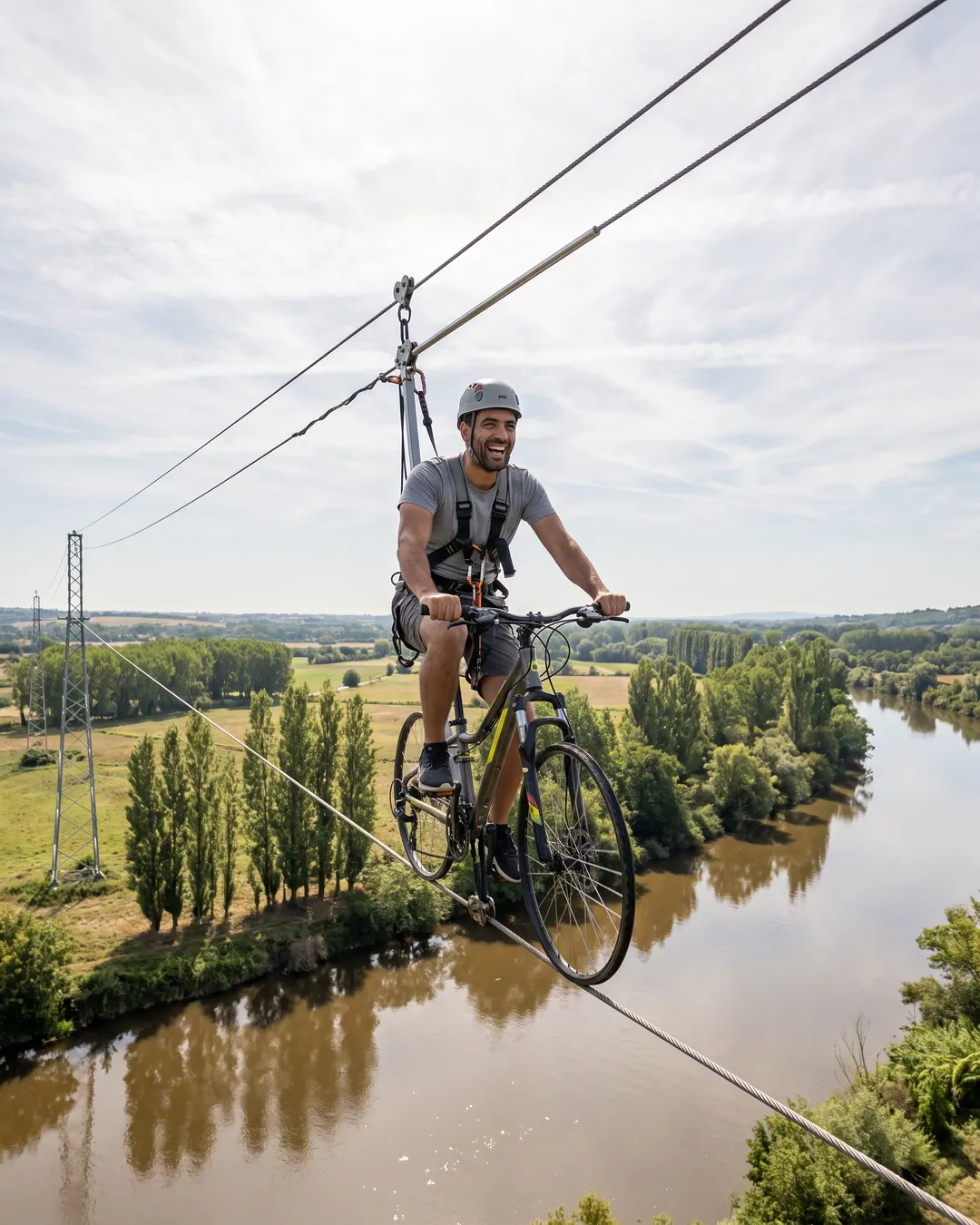
Mechanical rides such as a human gyro, zip cycle or bungee trampoline add variety for guests who do not want heights. They are mid-priced and need less land.
4. Inflatables and team games
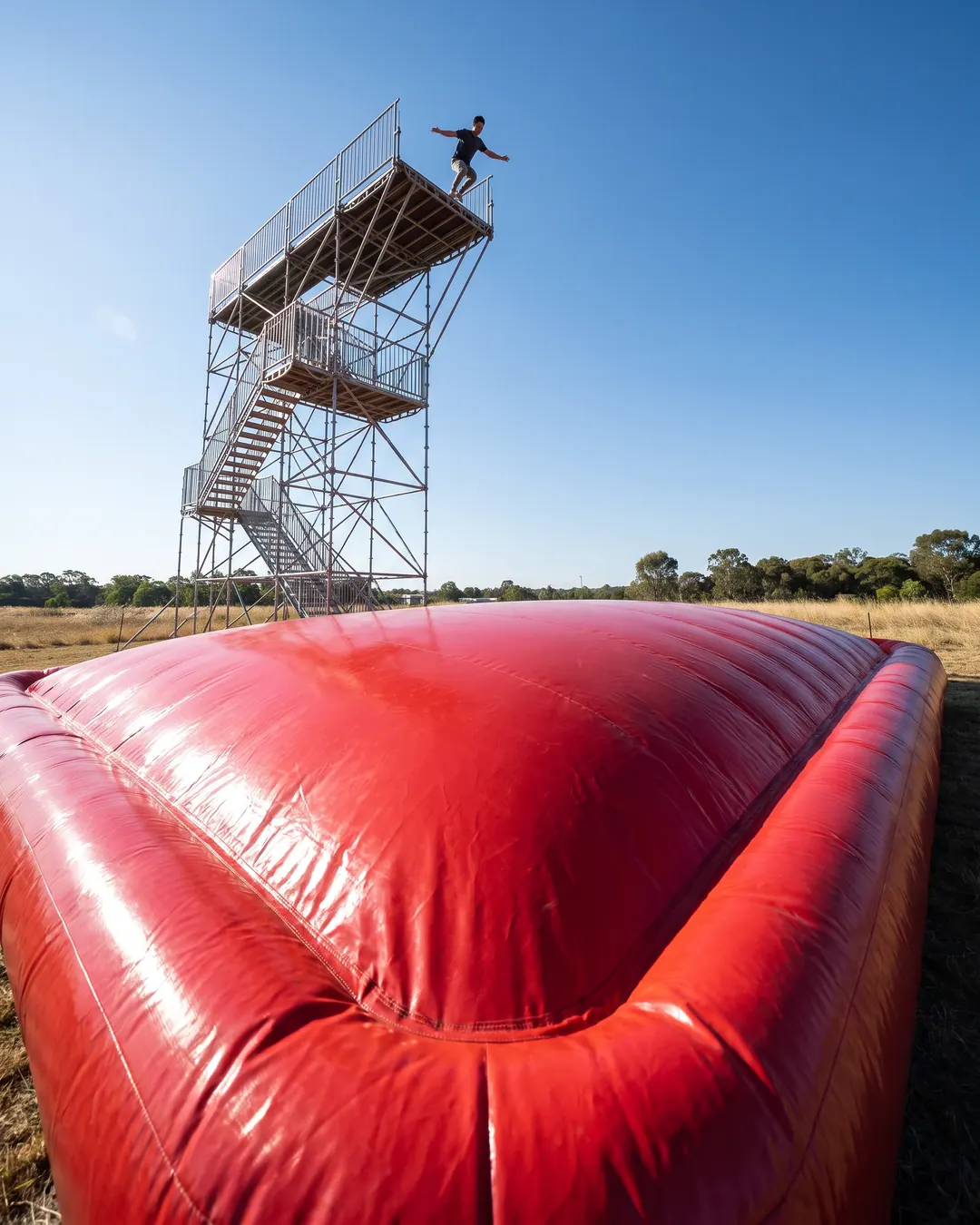
Inflatable obstacle courses, bungee run and soapy football are the lowest capex layer. They fill open ground quickly, suit birthday and corporate bookings, and can be moved around as you learn what sells.
A sample budget split for a Rs 3 crore park
To make the numbers real, here is how a typical Rs 3 crore standalone park on about 2 acres might divide its money. Every site is different, but the proportions are a useful sense check when you read a quote:
- Attractions and safety gear: about Rs 1.7 crore to Rs 1.9 crore, covering a high rope course, a zipline, a climbing wall, one swing ride and a set of inflatable and team games.
- Civil works, foundations and surfacing: about Rs 35 lakh to Rs 50 lakh.
- Power, lighting, water and CCTV: about Rs 15 lakh to Rs 25 lakh.
- Guest areas such as ticketing, toilets, shade and cafe shell: about Rs 25 lakh to Rs 40 lakh.
- Design, freight, installation and training: about Rs 15 lakh to Rs 25 lakh.
- Contingency and launch marketing: the balance.
Indoor or outdoor: how the cost changes
Indoor adventure parks inside malls or warehouses save on land and weather, but they pay for air conditioning, fire systems, rent and interior fit out. Per square foot they are usually more expensive to set up than outdoor parks, yet they run all year and are not hit by the monsoon. Outdoor parks need more land and shade, but they can host taller rides, longer ziplines and large group events. Your choice should follow your location: city centre sites lean indoor, highway, hill and resort sites lean outdoor.
Costs people forget
These lines catch first time owners off guard:
- Soil testing and foundations. Tall towers and swing structures need proper footings. Rocky or filled land can change foundation cost a lot.
- Safety surfacing. Fall zones need rubber, sand, wood chips or nets. It is not optional.
- Spare parts and consumables. Harnesses, ropes and brake parts have a service life. Budget for a first year spares kit.
- Staff before opening. Operators need training weeks before day one, and they are on payroll during that time.
- Marketing launch. A park with no launch budget opens quietly. Set aside 3 to 5 percent of capex for the first three months.
Phase the park to protect your cash
Many successful parks open with a core of six to ten attractions and add one new anchor every season. Phasing has real benefits: you learn what your guests actually buy, the second phase is funded partly by the first, and repeat visitors always have something new to try. Plan the master layout for the full park on day one, so power, paths and foundations for phase two are in the right place.
How to get a budget you can trust
A useful estimate needs a few inputs from you: the site location and area, a basic plot plan or Google Maps pin, your target guests (families, schools, corporates, tourists), the expected opening date, and the budget band you are comfortable with. With these, JumpKing plans, designs and delivers the park as one point of contact from brief to opening, and gives you an attraction list with a line by line quote. Warranties on equipment are as per the manufacturer’s terms, confirmed in your quotation.
You can browse individual attractions, rides and games with indicative prices in the JumpKing shop.
Questions buyers ask
What is the minimum budget for an adventure park in India?
A small adventure zone inside a resort or campus can start around Rs 40 lakh. A standalone park that can stand on its own ticket sales usually needs Rs 1.5 crore or more once site work and guest facilities are included.
How much land do I need?
A useful starter park fits on 1 to 2 acres. Below that, focus on vertical attractions such as rope courses, towers and climbing walls that stack activity on a small footprint.
Is installation included in the price?
Installation is quoted per project because it depends on location, access and the size of the crew needed. Freight is charged at actual.
Which safety standards should rides follow?
Rope courses are typically designed to EN 15567, and amusement rides to ASTM F2291 or EN 13814. Ask for the standard each item follows in your quotation.
Ready to price your park? Share your site and budget and get an attraction plan with indicative costs for your land.