
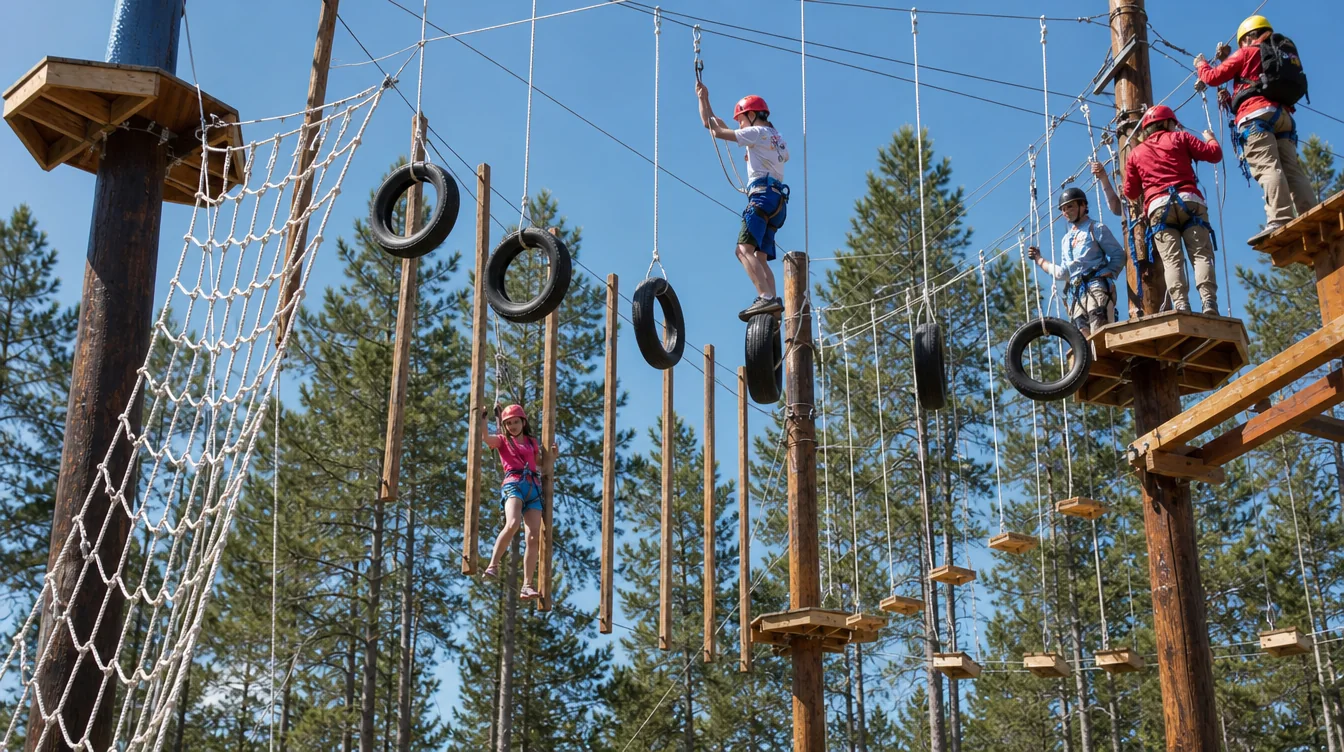
Which safety standards apply to rope courses, ziplines and climbing walls, what paperwork to ask for, and how inspections and operator training keep your park open.
If you are putting money into a rope course, zipline or climbing tower, safety is not a box to tick at the end. It decides whether you get insurance, whether schools and companies book you, and whether your park is still running five years from now. This guide explains, in plain words, which adventure park safety standards matter, what documents to ask for, how inspections work and how to train your operators.
Why safety standards matter to your business
Most owners first think of safety as a legal duty. It is, but it is also a sales tool. Corporate HR teams, school principals and event planners now ask direct questions before they book: Is the course built to a recognised standard? Who inspected it? Are the staff trained in rescue? A park that can answer these questions in one email wins the booking. A park that cannot loses it, often without ever knowing why.
Insurers think the same way. A clear paper trail of design, inspection and training records usually makes cover easier to get and claims easier to settle. And when something does go wrong, those same records show that you took reasonable care.
The standards worth knowing
India does not yet have one national code that covers every adventure attraction. In practice, owners, insurers and many state tourism departments look to well known European and American standards as the benchmark. You do not need to read them cover to cover, but you should know which one applies to each attraction you plan to buy.
| Attraction | Commonly used standard | What it broadly covers |
|---|---|---|
| High and low rope courses, ziplines inside a course | EN 15567 (parts 1 and 2) | Design, construction, belay systems, operation and staff duties |
| Aerial adventure courses and ziplines | ASTM F2959 | Design, installation, inspection and operation practice |
| Amusement rides and mechanical attractions | ASTM F2291, EN 13814 | Design loads, ride analysis, testing and maintenance |
| Inflatable play equipment | EN 14960 | Anchoring, blower, materials, user limits and supervision |
| Children’s playground equipment | EN 1176 | Fall heights, entrapment, surfacing and inspection |
| Climbing walls | EN 12572 | Wall structure, holds and anchor points |
| Helmets, harnesses, connectors | EN 12492, EN 12277, EN 12275 | Personal protective equipment testing |
These are typical references, not a complete list. Your state may also have its own adventure tourism guidelines or registration rules, and your local authority may ask for a structural stability certificate. Always check with the relevant department before you open.
What to ask for before you sign
A good proposal for a high rope course or zipline should come with paperwork, not just photos. Before you release an advance, ask for:
- Layout and design drawings showing element heights, clearances, platform sizes and the safety zone around each element.
- Structural calculations for poles, towers and cables, checked by a qualified engineer for your site’s wind and soil conditions.
- The standard the attraction is designed to, stated in writing, with any test reports or compliance declarations.
- Belay system details: is it a continuous belay or a smart lanyard system, and how does it stop a guest from unclipping by mistake?
- PPE certificates for harnesses, lanyards, trolleys and helmets.
- An operations and maintenance manual with daily, monthly and yearly checklists.
- A spare parts list with the parts you should keep on site from day one.
- Warranty terms, which are as per the manufacturer’s terms and should be confirmed in your quotation.
If a seller cannot give you these, treat it as a warning sign, however attractive the price.
How inspections work
Safety is kept up through a simple rhythm of checks. Most standards describe three levels.
Daily checks before opening
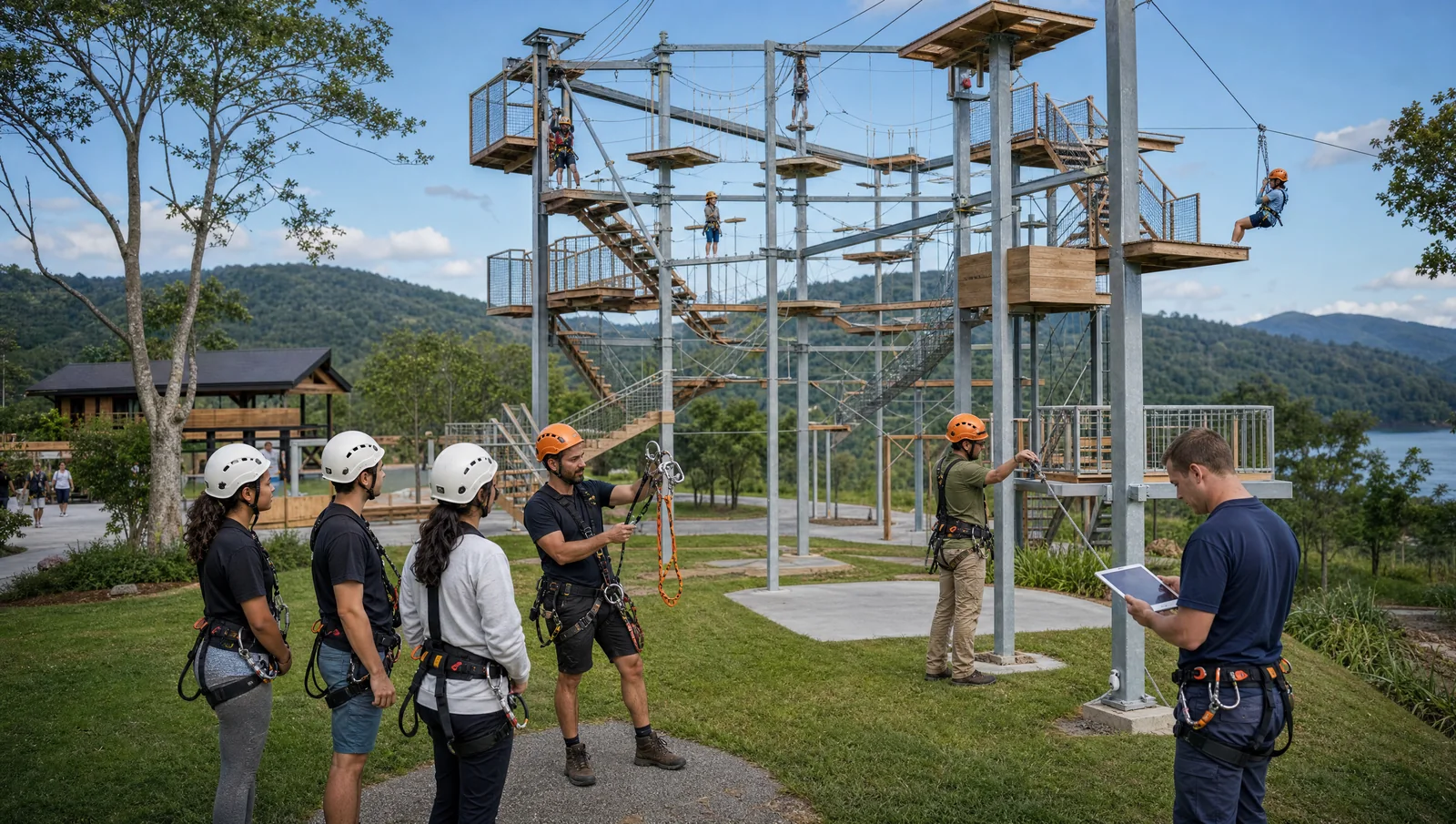
Your trained staff walk the course every morning. They look at cables, clamps, platforms, nets and belay lines, test the brakes on ziplines and check every harness and helmet. Anything doubtful is taken out of use. The check is signed in a logbook. It usually takes 30 to 60 minutes for a mid sized course.
Periodic checks
Once a month or once a quarter, depending on use and weather, a senior operator does a deeper check: cable tension, wear on pulleys and trolleys, wood condition, bolt torque and corrosion. Coastal and high rainfall sites need closer attention.
Annual independent inspection
Once a year, an inspector who did not build or sell the course should go over the whole installation and give a written report. Many insurers ask for this. Keep every report; they become the history of your park.
Braking systems deserve special care. A self regulating brake such as the Zipstop zipline brake reduces dependence on staff timing, but it still needs to be inspected and serviced exactly as the maker describes.
Operator training: the part owners skip
Most incidents at adventure parks trace back to people and procedures, not to steel and cable. That is why training deserves a real budget and a real schedule.
Good operator training usually covers:
- Guest briefing: how to explain the rules clearly in Hindi, English or the local language.
- Fitting PPE: harness sizing, buckle checks and helmet fit for children and adults.
- Running each element: start and end points, guest spacing and signals.
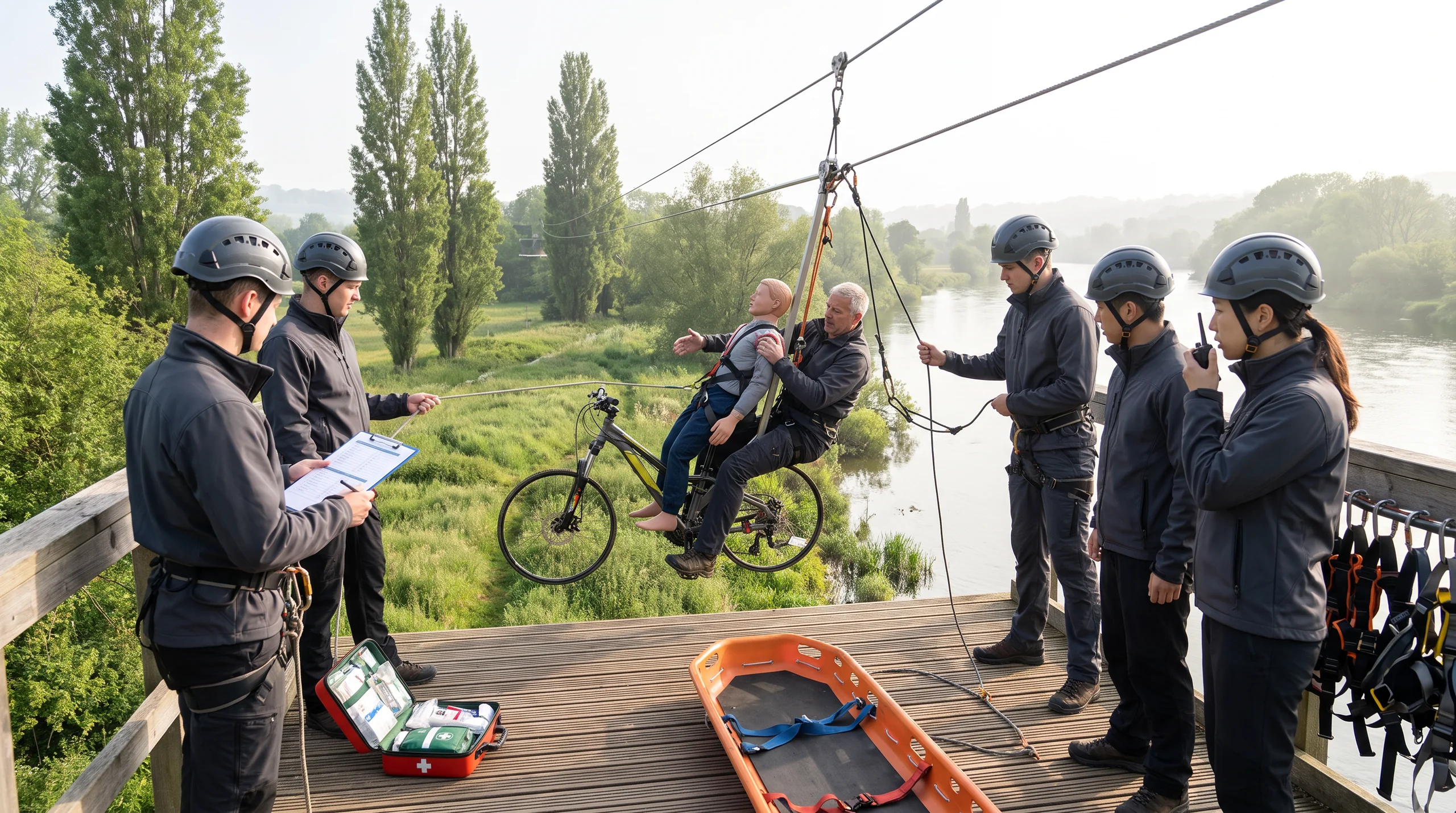
- Rescue: how to bring down a stuck or frightened guest from any point on the course, practised until it is calm and quick.
- Daily inspection: what to look for and how to record it.
- Weather rules: when to stop for wind, lightning or heavy rain.
Rescue drills should be repeated at least monthly, and new staff should shadow experienced operators before they run a session alone.
A well trained team on average equipment is safer than an untrained team on the best equipment money can buy.
Guest rules, limits and signage
Every attraction has height, weight and age limits set by its maker. Put them on a clear board at the entry, check them at the counter and do not bend them for a VIP or a crying child. Add a short waiver, a briefing area with shade and seating, and a visible staff member at every high point.
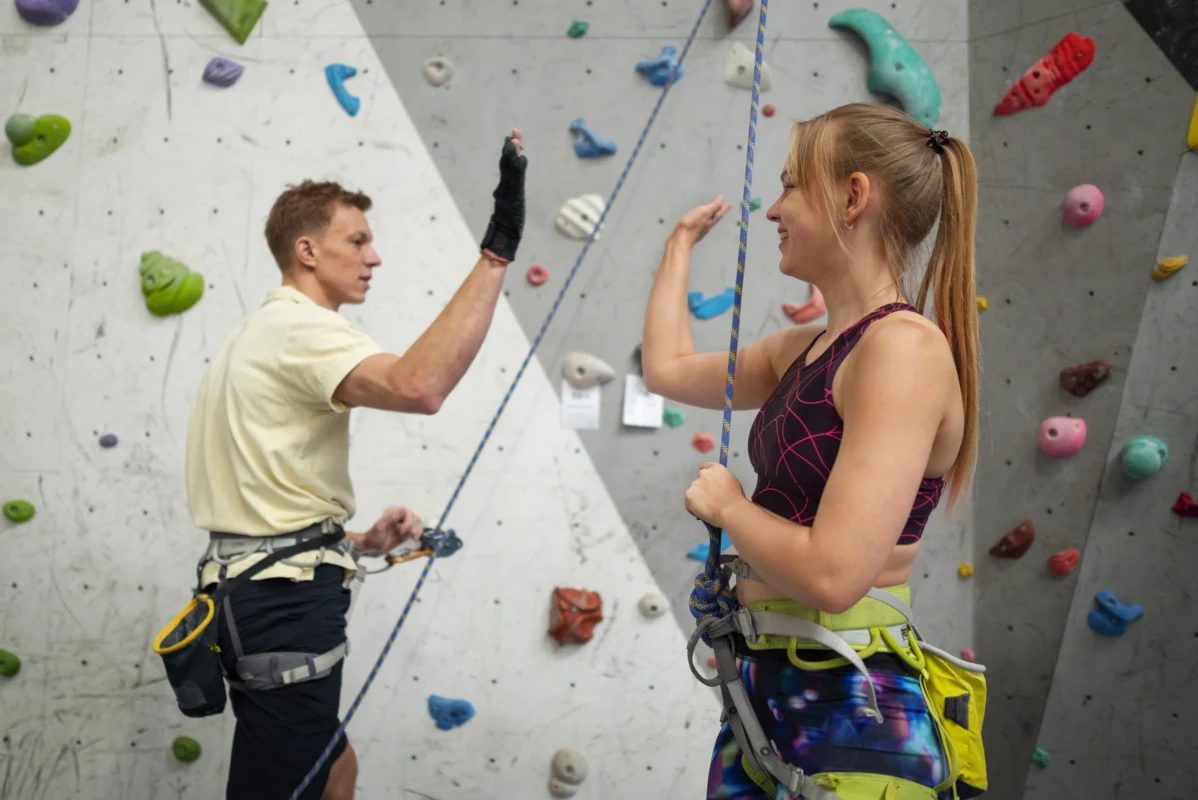
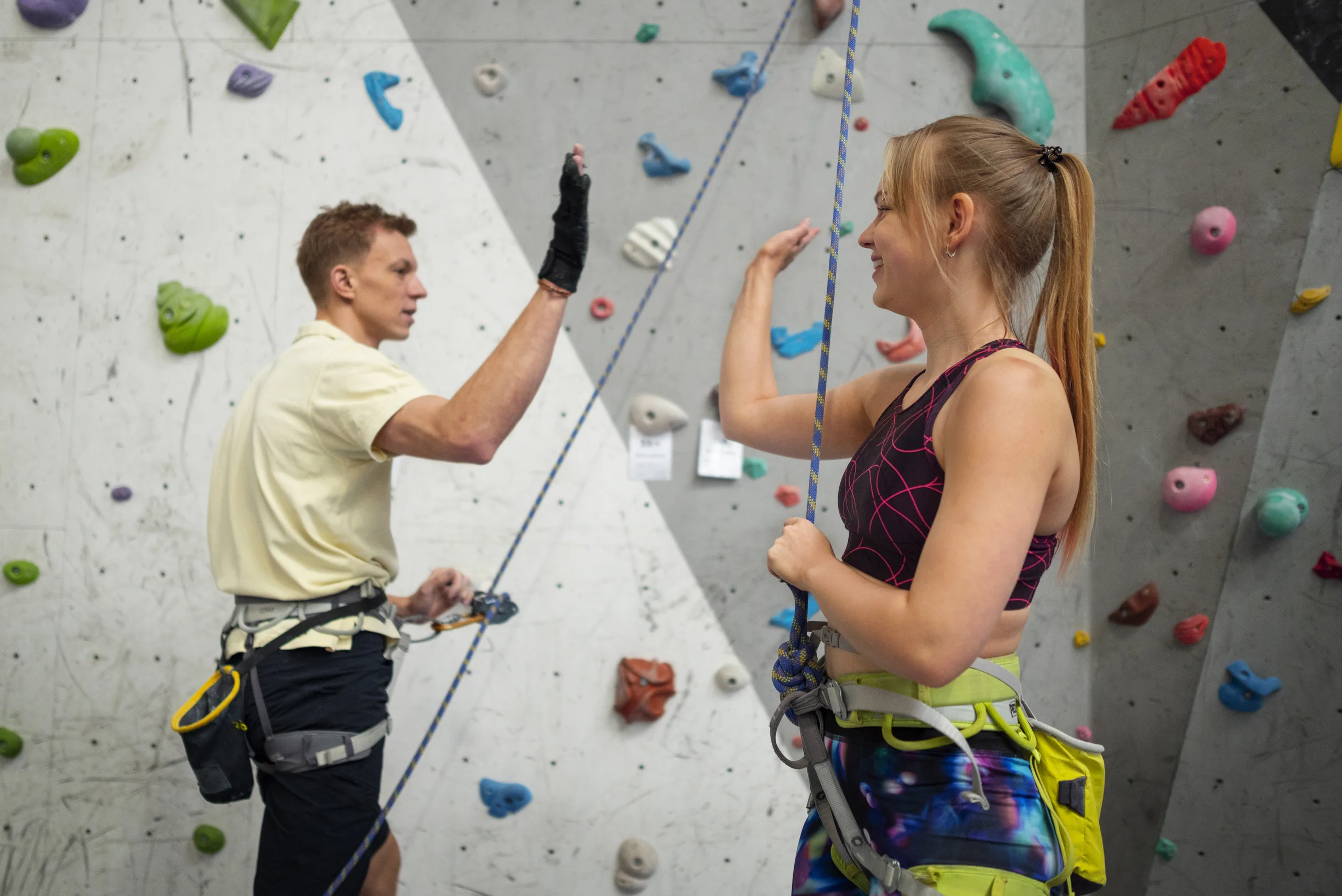
Climbing attractions such as a rock climbing wall or a free fall jump with auto belay need their own rules: a landing zone kept clear at all times and a staff member who confirms each clip in before the guest leaves the ground.
What the owner handles, and where JumpKing fits
JumpKing plans, designs and delivers adventure parks and attractions, with one point of contact from brief to opening. We help you choose attractions that suit your site and audience, share the relevant design documents, and arrange operator training and handover. As the owner, you handle civil works, local permits, insurance and the daily running of the park, including keeping inspection records up to date.
You can browse rope courses, ziplines, climbing walls and safety gear in our shop to get a feel for options and starting prices.
Questions buyers ask
Is there one Indian safety standard for adventure parks?
Not a single national one for every attraction. Many owners and insurers use EN 15567 for rope courses, ASTM F2959 for aerial courses, EN 14960 for inflatables and ASTM F2291 or EN 13814 for rides, along with any state tourism guidelines.
How often should a rope course be inspected?
Typically a documented daily check before opening, a deeper periodic check every one to three months, and an independent inspection once a year.
How long does operator training take?
For a typical rope course or zipline, initial training often runs three to seven days, followed by supervised sessions and regular refresher drills.
Who is responsible for permits and insurance?
The owner. JumpKing can share documents your consultant or insurer may ask for, but applications and policies sit with you.
Planning a new park or upgrading an old one? Share your site and budget and we will suggest a safe, sensible plan.