
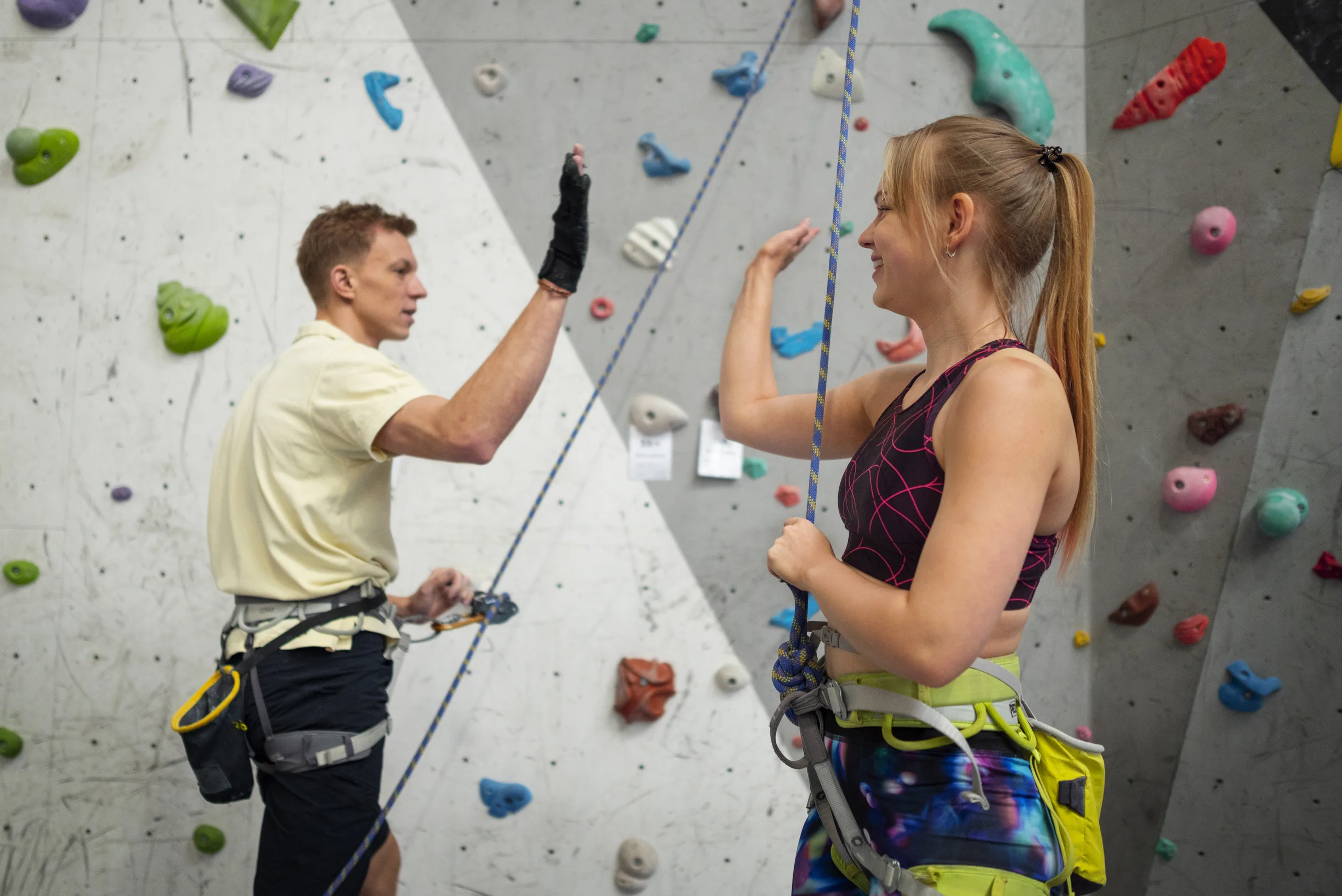
A plain guide to planning a rope course or zipline: height bands, zipline length and braking, throughput per hour and the safety points that matter.
Rope courses and ziplines are the backbone of most adventure parks, resorts and outdoor camps in India. They look simple, but good ones are carefully planned around height, guest capacity, throughput and safety. This guide explains each of those in plain terms so you can brief a designer with confidence and judge the quotes you receive.
Low, high or both: choosing the course type
Rope courses fall into three broad types:
- Low rope course: elements 0.5 to 1.5 metres off the ground. Used for team building, schools and young children. Spotters on the ground, no harness in most cases.
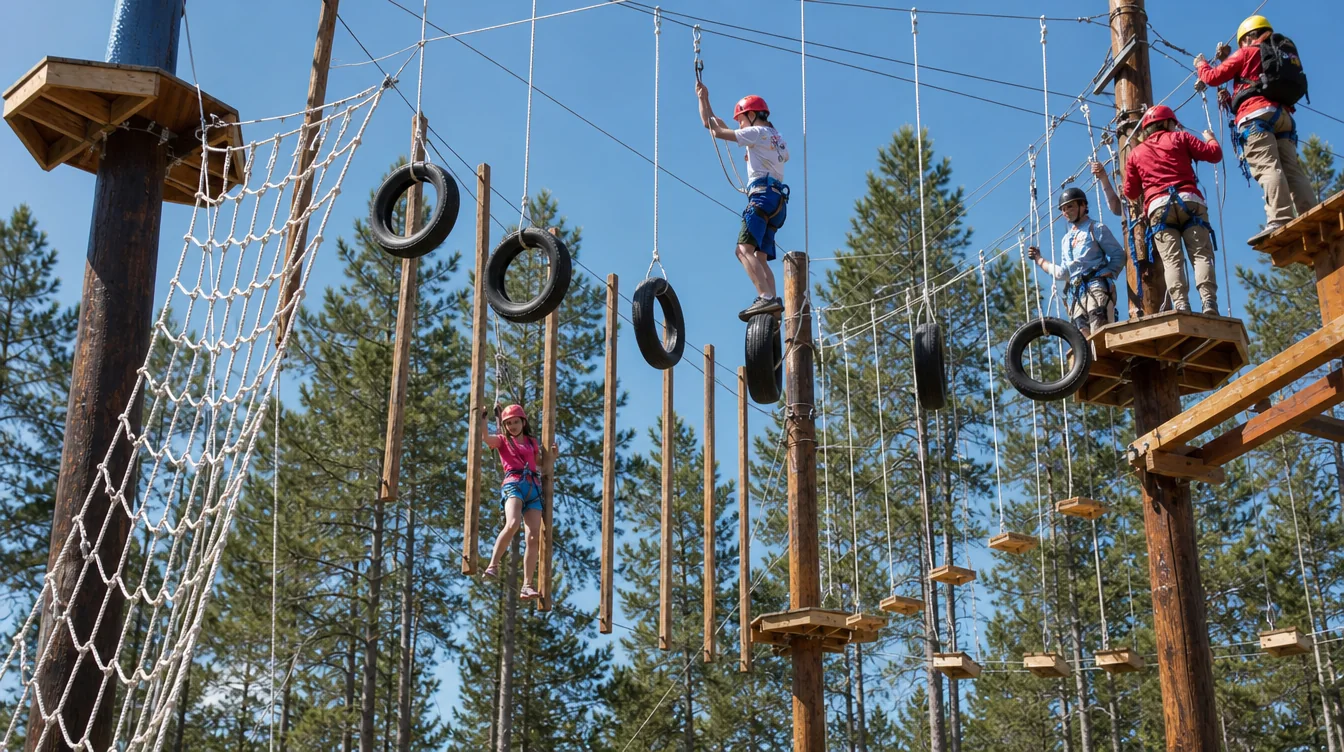
- High rope course: elements typically 6 to 15 metres high, with harnesses and a continuous belay or smart lanyard system. The main product for adventure parks and resorts.
- Kids course: a lower version of the high course, often 1 to 3 metres, with a continuous belay so children cannot unclip.
Many sites combine a high rope course for teens and adults with a net walk for kids and families, so every age group has something to do.

Height: what changes as you go up
Height drives cost, excitement and staffing. As a guide:
| Height band | Best for | Structure | Notes |
|---|---|---|---|
| 1 to 3 m | Kids, schools | Poles or steel frame | Low staffing, easy rescue |
| 6 to 10 m | Families, corporates | Poles, trees or steel tower | The most common band for parks and resorts |
| 10 to 15 m | Thrill seekers | Steel tower or tall poles | Higher cost, strong views, needs trained rescue staff |
| Multi-level tower | Small footprints | Steel structure | Two to four levels stacked, very high capacity per sq ft |
If you are short of land, a multi-level adventure tower with climbing, a zipline exit and a free fall jump gives you many activities on a footprint of a few thousand square feet.
Zipline planning: length, slope and braking
A zipline needs a start platform, an end platform, a cable sized for the span, and a reliable braking system. Key planning points:
- Length: short ziplines of 50 to 100 metres suit resorts and campuses. Long lines of 300 metres and more become a destination product.
- Slope: typically 4 to 8 percent fall over the length, adjusted for rider weight range and speed.
- Braking: passive brakes, or an active system such as a Zipstop zipline brake, which gives consistent stops across rider weights.
- Clearances: a clear corridor on both sides and below the line, free of branches and structures.
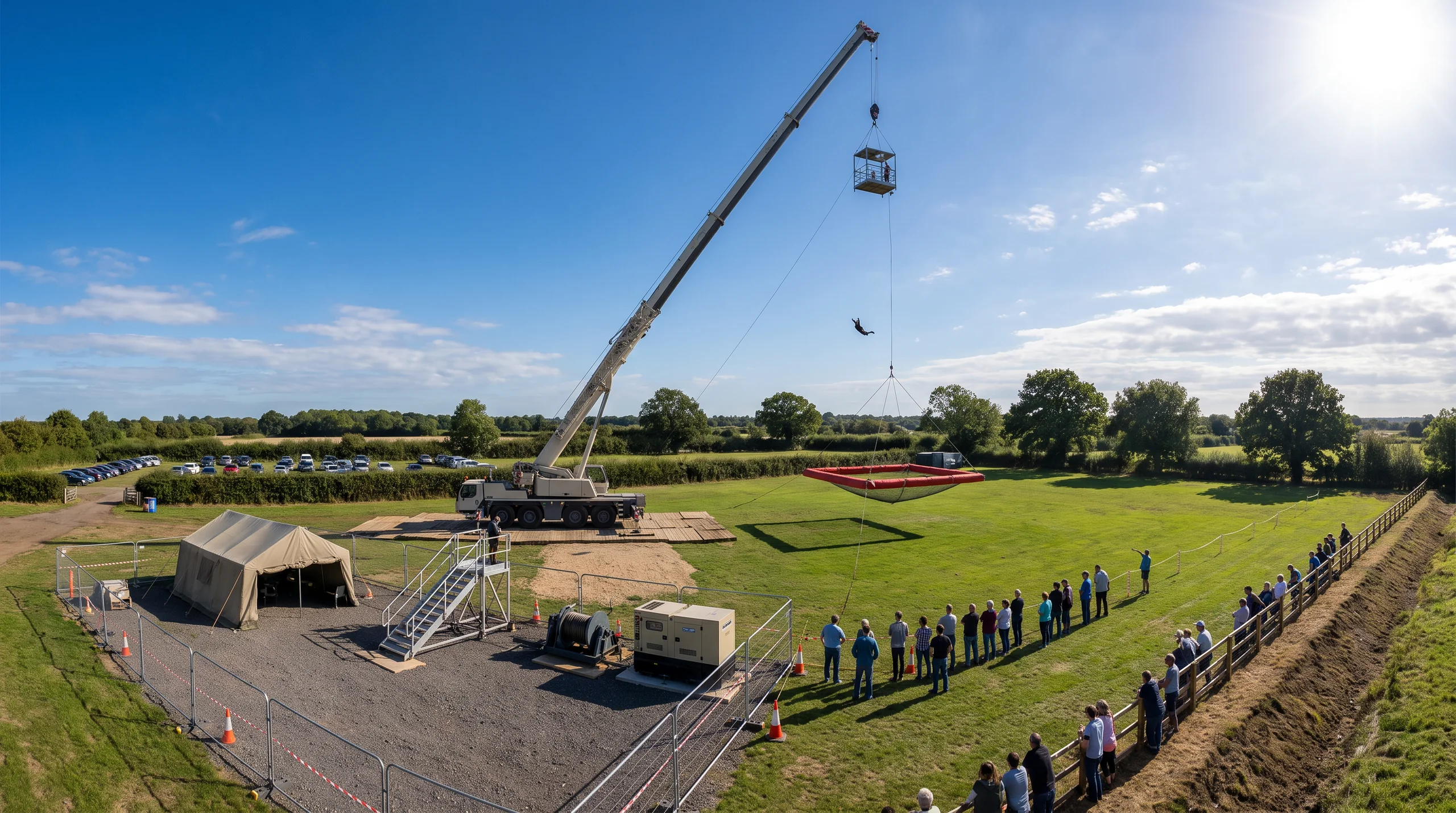
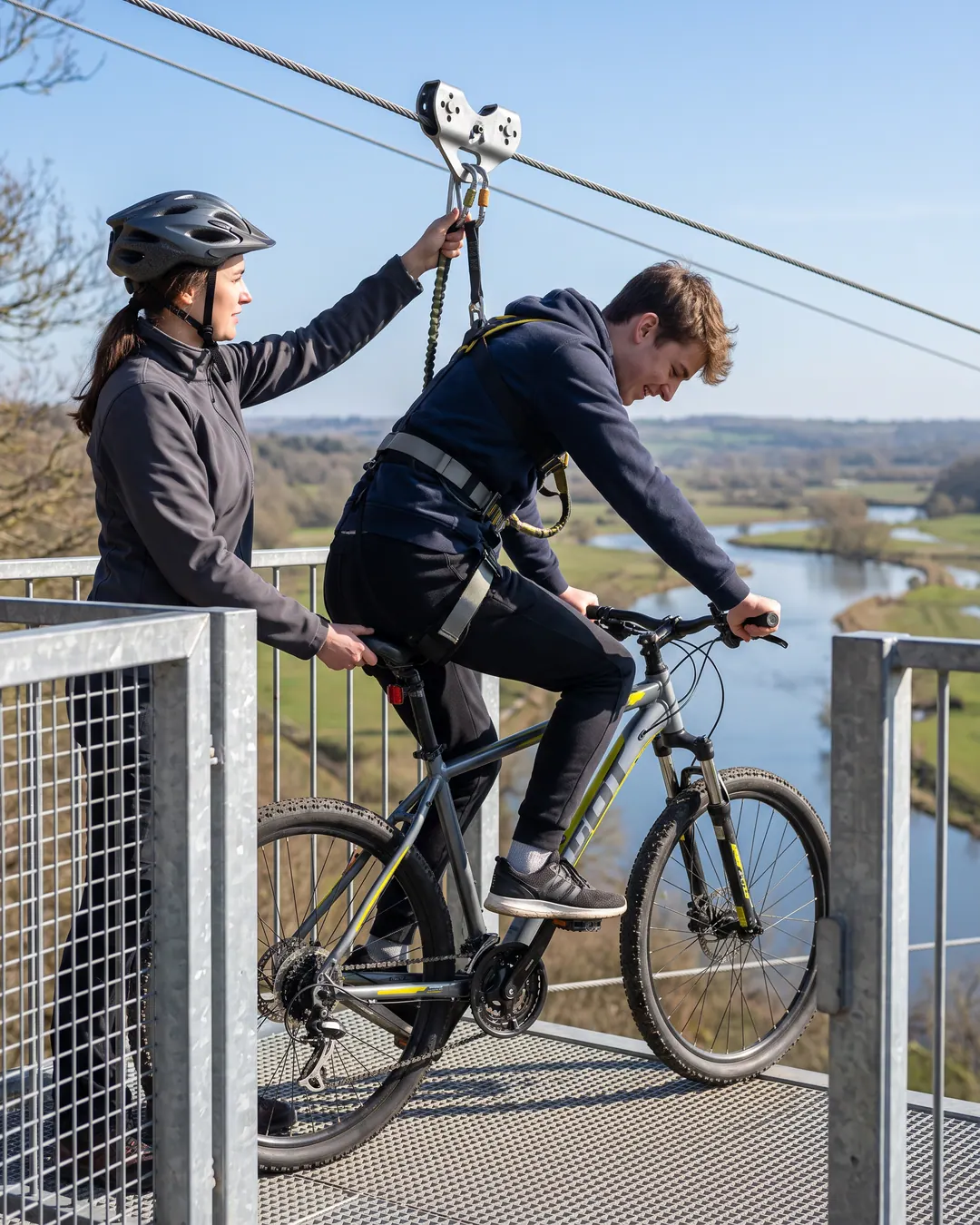
For sites without natural height, a launch tower zipline creates the drop from a steel tower.
Capacity and throughput: the numbers that make money
Capacity is how many people can be on the course at once. Throughput is how many guests finish per hour. Throughput decides your revenue, so plan it carefully.
- Count the start points. Each start point lets a new guest enter every 30 to 60 seconds once the course is running.
- Estimate time on course. Most high courses take 20 to 45 minutes per guest.
- Allow for briefing and kitting up. Harness fitting and a safety briefing take 10 to 15 minutes per batch.
As an indicative example, a course with 3 start points and 30 elements might handle 60 to 120 guests per hour. A single zipline, with one rider at a time and a 60 to 90 second cycle, handles about 40 to 60 riders an hour. If you expect school groups of 200, plan multiple routes or two parallel ziplines.
Safety: what a good design includes
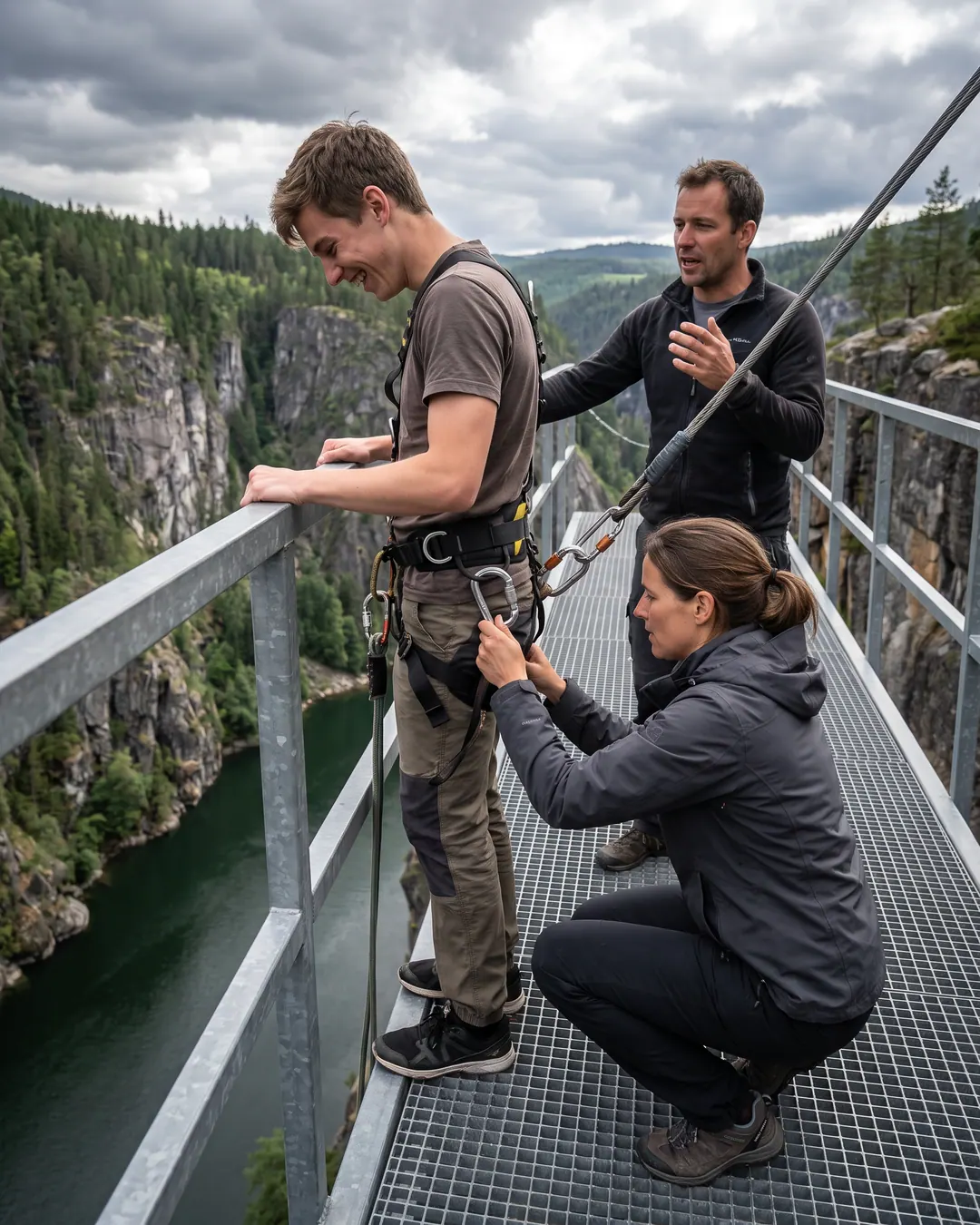
Safety is designed in, not added later. Look for these points in any rope course or zipline plan:
- Standards: rope courses are typically designed to EN 15567 parts 1 and 2, and ziplines to EN 15567 or ASTM F2959.
- Belay system: smart lanyards that stop guests from unclipping both hooks at once, or a continuous belay that never unclips.
- Rescue plan: every element must be reachable by trained staff with a rescue kit.
- Structural design: foundations and poles designed by a qualified engineer for the loads and local soil.
- Inspections: daily operator checks, periodic detailed checks and an annual inspection by a competent inspector.
- Staff training: operators trained and assessed before opening, with refresher drills.
Site survey checklist
A good rope course or zipline plan starts with a proper site survey. Share these details at the enquiry stage to get an accurate layout and quote:
- A site plan or Google Maps pin with the area marked, plus photos from several angles.
- Level differences, slopes and any natural features such as valleys, trees or water.
- Soil type if known, and whether there is rock close to the surface.
- Overhead power lines, buildings and roads near the planned corridor.
- Expected guests: ages, group sizes and peak day numbers.
- Whether the course will run at night, which needs lighting along the route.
Operating procedures matter as much as hardware
Every course needs written procedures covering guest briefing, harness fitting, minimum and maximum age and weight, weather limits, rescue, and daily opening checks. Operators should sign the daily checklist, and the log should be kept on site. These records protect guests, staff and owners, and insurers often ask to see them.
Budget guide
Indicative ranges for India: a low rope course can start from Rs 5 lakh to Rs 15 lakh. A high rope course with 15 to 30 elements typically runs Rs 15 lakh to Rs 60 lakh, and a multi-level tower Rs 40 lakh to Rs 1.5 crore. A resort zipline of 100 to 300 metres can range from Rs 6 lakh to Rs 30 lakh depending on platforms and braking.
How JumpKing helps
JumpKing plans, designs and delivers rope courses and ziplines as one point of contact from brief to opening: site study, layout, throughput plan, quotes and delivery coordination. Warranties are as per the manufacturer’s terms, confirmed in your quotation.
You can browse individual attractions, rides and games with indicative prices in the JumpKing shop.
Questions buyers ask
Can a rope course be built on trees?
Yes, if the trees are healthy, large enough and assessed by an arborist. Many sites use poles or steel structures instead for long life and easier inspection.
How long can a zipline be on flat land?
On flat land you need a tall start tower, so most flat site ziplines are 50 to 150 metres. Longer lines usually need a natural slope or valley.
How many staff does a rope course need?
Typically one operator per start point, one or two on the course for help and rescue, and one at the zipline end. Numbers depend on layout.
What is the weight limit for riders?
Most systems specify a range, often around 25 kg to 120 kg, set by the equipment and design. The exact range is confirmed for your system.
Planning a rope course or zipline? Share your site and budget with photos and dimensions, and get a layout and indicative quote.