
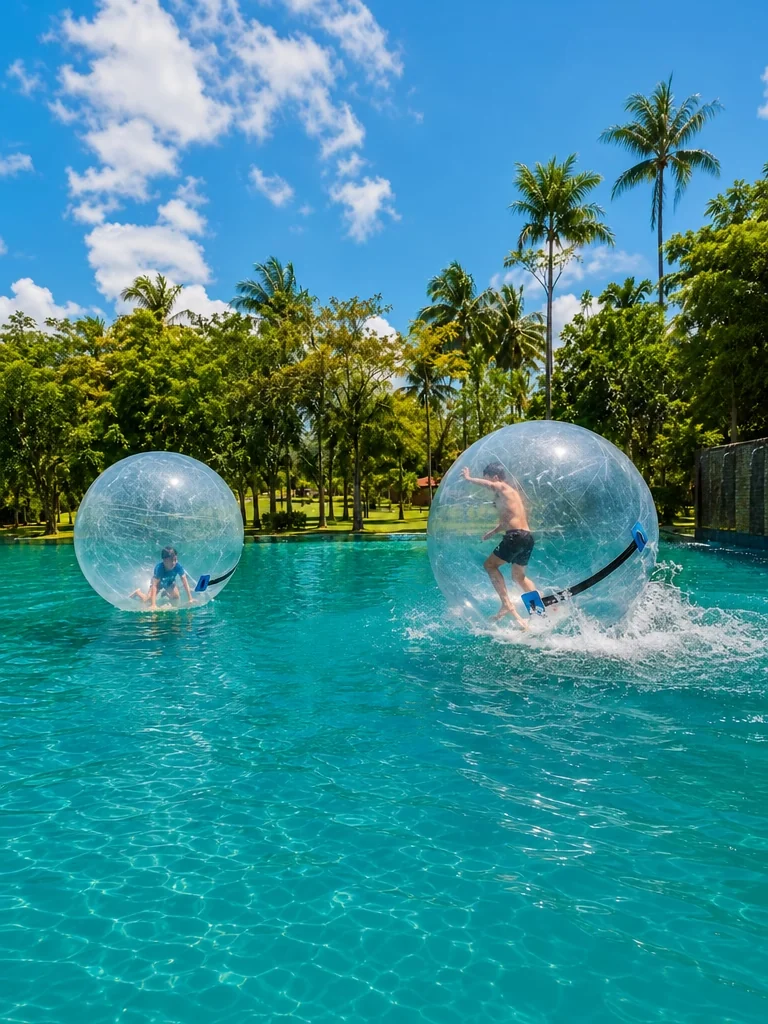
How floating aqua parks work on resort lakes and pools in India, with space and depth needs, safety, revenue and indicative budgets.
An inflatable aqua park can turn a resort lake, a reservoir edge or a large pool into the busiest spot on the property. Guests run, climb, slide and splash across floating obstacles, and every one of them takes photos. This guide explains how floating water parks work, what space and water they need, how safety is managed, and what they typically cost in India.
What an inflatable aqua park is
An inflatable aqua park is a set of floating modules, such as runways, climbing walls, slides, trampolines, balance beams and towers, linked together and anchored in open water. Guests wear life jackets and move freely across the course. Modules can be rearranged, and the whole park can be deflated and stored at the end of the season.
Common add-ons include an aqua launcher water blob, an aqua seesaw, an inflatable water spinner and, for younger children, inflatable kids kayaks in a separate shallow area.
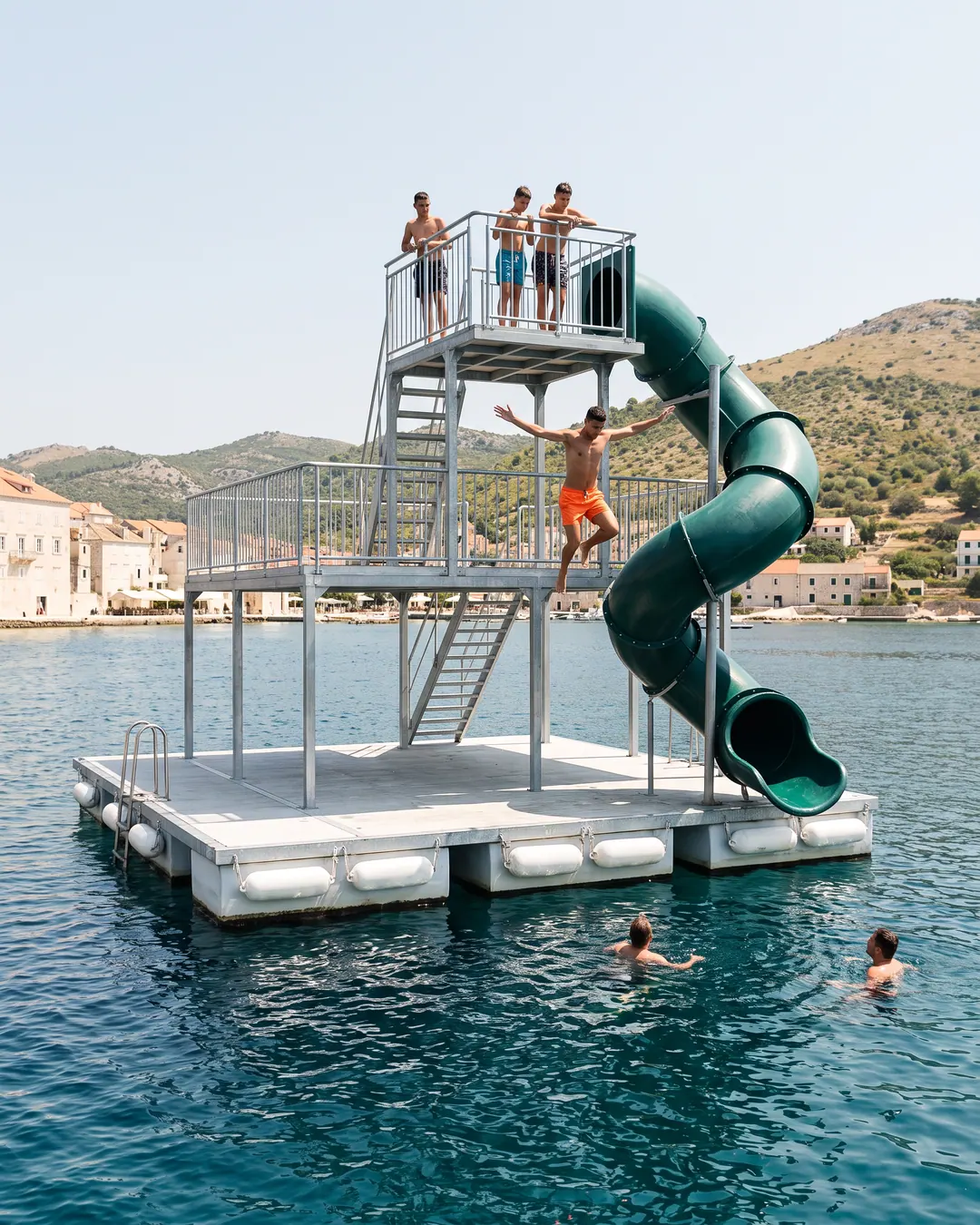
Where it works: lakes, sea fronts and pools
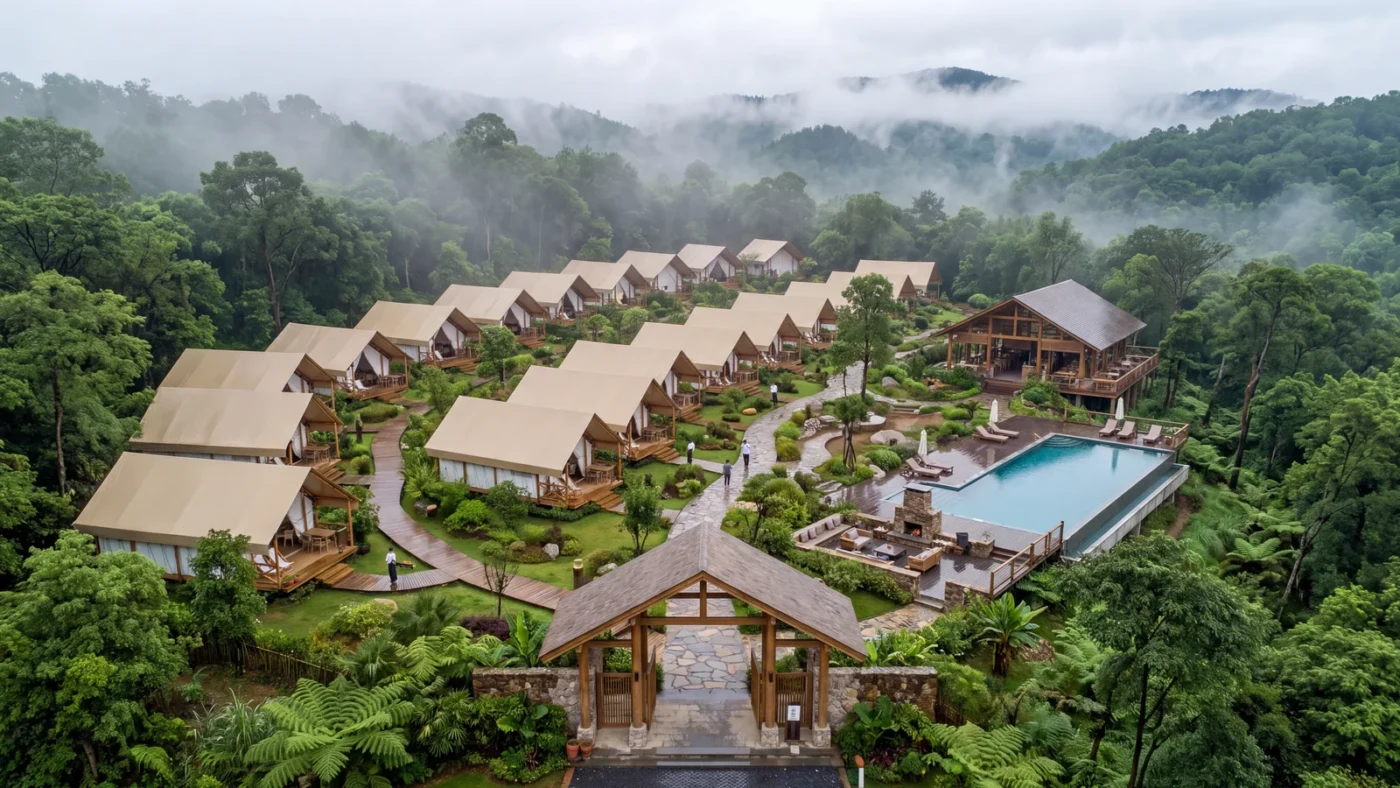
- Resort lakes and reservoirs: the most common setting in India. Calm water and easy access make operations simple.
- Sheltered sea fronts and backwaters: possible where waves and currents are low. Needs stronger anchoring and seasonal planning.
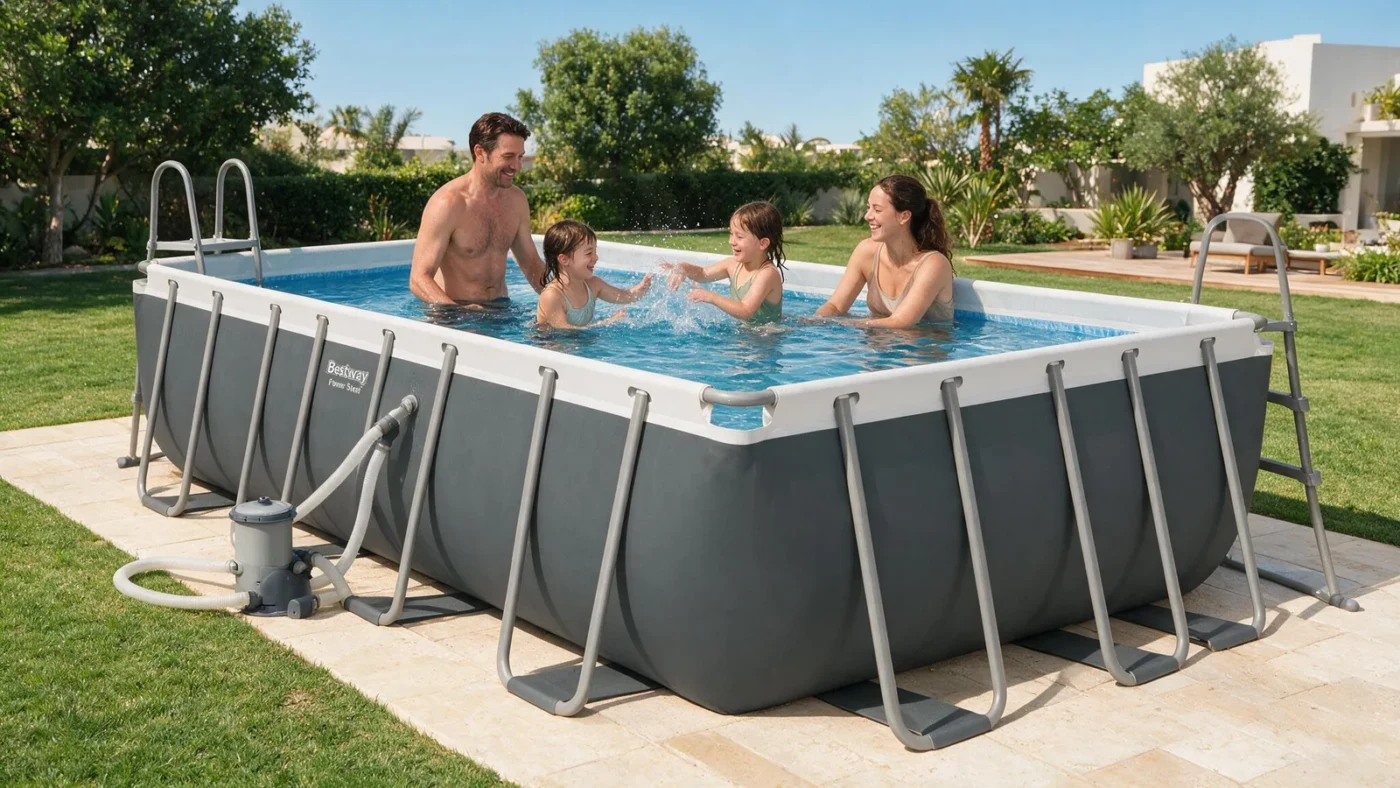
- Large pools: smaller modular parks work in hotel and club pools, often run on weekends or as an event attraction.
Space and water requirements
As a planning guide:
| Park size | Water area needed | Guests at one time | Indicative budget |
|---|---|---|---|
| Small | 400 to 800 sq m | 30 to 60 | Rs 15 lakh to Rs 35 lakh |
| Medium | 1,000 to 2,000 sq m | 60 to 120 | Rs 35 lakh to Rs 80 lakh |
| Large | 2,500 sq m and above | 120 to 250 | Rs 80 lakh to Rs 2 crore and above |
Other key requirements:
- Depth: typically at least 2 to 2.5 metres under jump and slide areas, and more under tall towers or blobs.
- Water quality: clean, clear water where lifeguards can see guests. Murky water needs extra care and may not be suitable.
- Clear zone: a buffer around the park free of boats, rocks and underwater obstructions.
- Shore facilities: changing rooms, life jacket store, first aid point, shade and a briefing area.
Checking your water before you plan
Before a layout is drawn, collect a few basic facts about the water body: a rough depth map at several points, how much the level rises and falls across the year, the type of bed (mud, sand or rock), and whether boats or other activities share the water. Simple photos from the shore and a sketch of the area help a lot. Seasonal level changes are especially important for reservoirs and dams, because anchor lines must be adjusted as the water drops.
Anchoring and installation
Floating parks are held in place with anchors, chains and ropes sized for the park and the water conditions. Typical options are concrete block anchors, screw anchors or sand bags depending on the lake bed. A proper anchor plan keeps the layout stable in wind and stops modules drifting. Installation is quoted per project, and for most medium parks the on-water setup takes a few days once anchors are in place.
Safety and operations
Inflatable aqua parks are safe when run properly. A good operating plan includes:
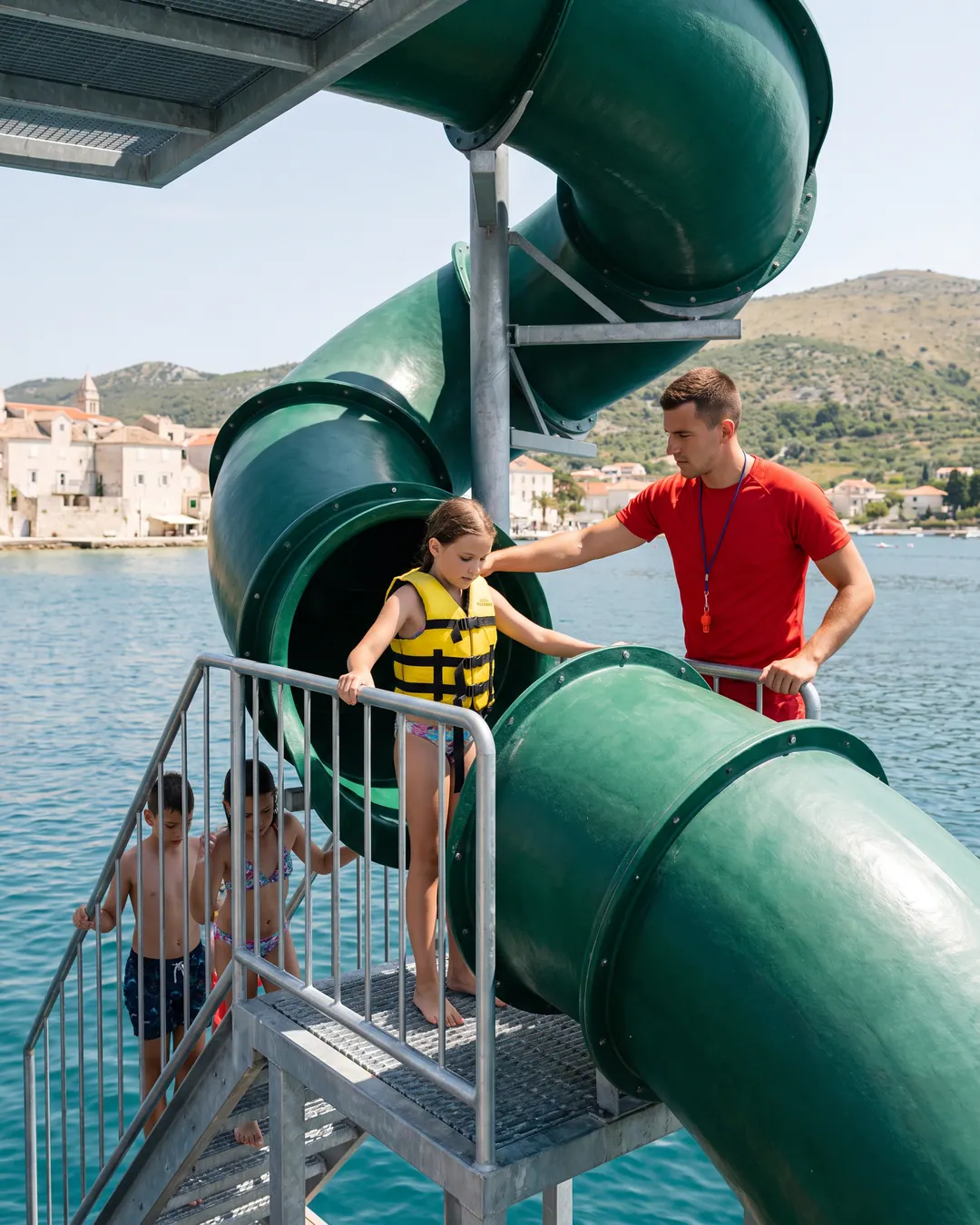
- Life jackets for every guest, correctly sized and fastened, checked before entry.
- Swimming test or rule for minimum age, height and ability, with a separate kids area.
- Lifeguards on water and on modules, typically one for every 15 to 25 guests depending on layout.
- Timed sessions of 30 to 60 minutes so the park never gets overcrowded.
- Daily checks of air pressure, seams, anchor lines and handles.
- Weather rules to close the park in lightning, high wind or rough water.
Choosing the right module mix
A good floating park is not just a collection of large inflatables. It is a circuit with a clear flow, so guests move in one direction and do not crowd one spot. When planning the layout, think about:
- An easy entry: a wide, stable entry module close to the jetty or shore so guests start with confidence.
- Mixed difficulty: balance beams and climbing walls for challenge, flat runways and trampolines for easier play.
- Height features at the edges: towers, slides and blobs placed where there is deep water and good lifeguard sight lines.
- A separate kids zone: smaller, lower modules in shallower water, with their own lifeguard.
- Rest points: wide flat modules where tired guests can sit before moving on.
Guest flow on shore
The shore side decides how many sessions you can run in a day. Plan a briefing area with shade, a life jacket fitting point, lockers and a waiting area for the next batch. A short safety video or talk before each session saves time on the water and cuts incidents.
Revenue: why resorts love them
Floating parks work as a paid add-on for resort guests and as a day visitor product. Indicative ticket prices in India range from Rs 400 to Rs 1,200 per one hour session. A medium park with 80 guests per session and four to six sessions on a busy day can sell 300 to 450 tickets. Combine it with a Tarzan boat floating slide, kayaks or pedal boats and you have a full water day package that lifts room nights and food sales.
Seasonality and storage
In most of India the main season runs from March to June and again after the monsoon. Plan for heavy rain, flooding and strong winds: many operators deflate and store the park during the peak monsoon months. Good storage, cleaning and drying before packing extend the life of the modules considerably.
How JumpKing helps
JumpKing plans, designs and delivers inflatable aqua parks with one point of contact from brief to opening: site assessment from your photos and depth data, park layout, anchor plan, quotes and delivery coordination. Warranties are as per the manufacturer’s terms, confirmed in your quotation.
You can browse individual attractions, rides and games with indicative prices in the JumpKing shop.
Questions buyers ask
How deep should the water be for an inflatable aqua park?
Typically at least 2 to 2.5 metres under jumping and sliding modules, and more under tall towers and blobs. Shallower areas can be used for a kids zone.
Can an aqua park be installed in a swimming pool?
Yes, a smaller modular park can work in a large pool, anchored to the pool edges. Pool depth decides which modules are suitable.
How long do inflatable water park modules last?
With good handling, cleaning and storage, commercial modules commonly last several seasons. Life depends on UV exposure, usage and care.
Which standard applies to floating play equipment?
Inflatable water play equipment is commonly designed to EN 15649 for floating leisure articles, along with the manufacturer’s own limits.
Have a lake or large pool? Share your site and budget with photos and water depth, and get a park layout with indicative costs.